

Granite countertops are a good choice for kitchens and bathrooms, adding elegance and long-lasting value to a home. Despite their toughness, they are not scratch-proof and can develop marks from daily use. But the good news is that there are several simple ways to remove scratches and restore your granite countertop’s original beauty.
This guide will empower you with the best techniques for identifying, repairing, and preventing scratches on granite countertops. Whether dealing with light surface marks or deeper scratches, you’ll learn how to fix them effectively. By following these steps, you can confidently maintain your countertops’ flawless and elegant look for years to come.
Steps in Removing Scratches in Granite Countertops
1. Assessing the Scratch Depth
Before choosing a repair method, it’s essential to determine how deep the scratch is. A simple way to check is by running your fingernail across the scratch—if your nail catches, the scratch is deeper and may require filling or sanding. The scratch is likely surface-level if it doesn’t catch and can be buffed out with a polish or cleaning solution.
Shallow scratches are marks that typically have not penetrated the sealant layer. They can be addressed with a mild polish or a homemade remedy like baking soda paste. On the other hand, deeper scratches may require more extensive repair, such as filling with epoxy to restore the surface’s smoothness.
Assessing the depth of the scratch is a crucial step that will save you time and effort by ensuring you use the right approach from the beginning. Once you determine the level of damage, you can proceed with the appropriate repair method to restore your granite countertop, feeling informed and prepared.
2. Preparing the Surface for Repair
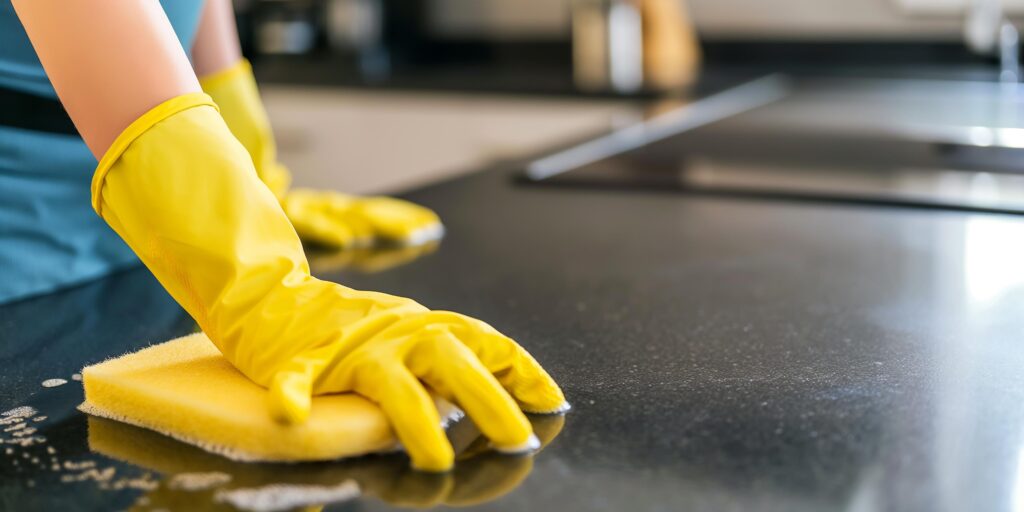
Before you start repairing scratches, it’s crucial to begin with a clean surface. Dirt, grease, or food residue can interfere with the repair process, making it harder for polish, fillers, or sealants to fill in correctly. A simple cleaning solution of warm water and mild dish soap is usually enough to remove grime and ensure the best results for your repair efforts.
Use a soft microfiber cloth or a non-abrasive sponge to wipe down the countertop, removing all debris. Avoid using harsh chemical cleaners, ammonia, or acidic substances like vinegar, as these can weaken the granite’s protective seal. Keeping your countertop free from abrasive materials will prevent additional damage while preparing for repairs.
Once cleaned, dry the surface thoroughly with a fresh microfiber cloth. Any remaining moisture can interfere with the effectiveness of the polish or repair products that you would apply later. A completely dry surface ensures the best possible results when fixing scratches.
3. Removing Light Surface Scratches
A. Using Baking Soda Paste
- Mix baking soda with water to form a thick paste, then apply it to the scratch.
- Gently rub the paste in circular motions using a soft cloth.
- After buffing in the paste, wipe it off with a damp cloth. Repeat the process if the scratch remains visible until the surface looks smooth.
This method is a simple and cost-effective solution for minor scratches. It gently buffs out surface marks without damaging the granite.
B. Applying Granite Polish
- Use a granite-specific polish for light scratches, which is available at home improvement stores.
- Apply a small amount to the scratch and buff it gently in circular motions with a soft cloth.
This technique reduces the appearance of scratches and enhances the countertop’s natural shine. It also leaves a protective layer that helps prevent future damage. Regular polishing helps maintain the beauty of your granite countertop. It’s a quick and easy way to keep your countertop looking new.
C. Using a Drill or Electric Polisher
- Attach a felt pad to an electric polisher or drill, setting it at low speed.
- Move the tool in circular motions with light pressure to avoid creating new marks.
This method is ideal for larger scratches, efficiently restoring the countertop’s shine. It provides a more professional finish with minimal effort and time. A drill or electric polisher is especially helpful for countertops needing extensive buffing. It ensures an even and consistent finish across the surface.
4. Repairing Moderate Scratches
A. Using a Granite Repair Kit
- Select a kit that matches your granite color for a seamless repair.
- Clean and dry the scratched area before applying the filler. Use a spatula or toothpick to spread evenly over the scratch, ensuring complete coverage.
- After the filler has dried, gently buff the surface with a soft cloth or polishing pad. This helps blend the repair and makes the scratch less noticeable.
B. Using Fine Steel Wool
- Fine steel wool (grade 0000) is perfect for additional buffing if the scratch is still visible after using a repair kit. Lightly rub the area in circular motions to blend the scratch into the surrounding stone.
- Be gentle when using steel wool, as too much pressure can dull the granite’s finish. Wipe the area with a damp cloth to remove any residue and dust.
Steel wool is effective for minor to moderate scratches but should be used cautiously. Overuse can damage the sealant layer, so test it on an inconspicuous area first.
5. Fixing Deep Scratches
A. Filling with Color-Matched Epoxy
- To ensure a seamless repair, choose an epoxy that matches your granite’s color. A variety of shades can be found at hardware stores or granite specialty suppliers.
- Use a small spatula or toothpick to apply the epoxy evenly across the scratch. Remove excess to ensure a smooth finish and complete coverage.
- Let the epoxy dry thoroughly according to the manufacturer’s instructions, usually for several hours. Once set, sand the area lightly with fine sandpaper and apply granite polish to restore shine.
B. Sanding and Polishing
- Start with fine sandpaper to avoid further damage while sanding the scratch. Gently sand in circular motions, focusing on the scratched area to smooth it out.
- After sanding, wipe away dust with a damp cloth before polishing. Applying granite polish will restore shine and repair blend seamlessly with the rest of the surface.
- Consider resealing the countertop after polishing to protect it from future damage. This will help maintain the smooth surface and prolong the countertop’s longevity.
C. Considering Professional Repair
- Hire a professional for deep or large scratches. They have specialized tools and high-quality fillers to restore your countertop effectively.
- A professional repair may include resurfacing the granite, grinding the top layer, and resealing it. This method is beneficial for countertops that are heavily scratched or aging.
- Professionals can save time and prevent further damage. They can also provide tips on maintenance to help keep your granite looking its best.
How To Prevent Future Scratches in Granite Countertops
A. Daily Habits to Protect Granite
- Always use a cutting board instead of cutting directly on the granite to prevent minor surface marks. Although granite is durable, knives can still leave scratches over time.
- Avoid dragging heavy items such as pots, appliances, or ceramic dishes across the countertop. Lifting items gently prevents scratches and keeps the surface smooth.
- Clean spills immediately to prevent staining or etching. To protect the granite, wipe up any liquid with a soft cloth as soon as it happens.
- When cleaning, use soft cloths and avoid abrasive sponges or scrubbing pads. This prevents dulling the surface and keeps the finish intact.
- Regularly wipe down the countertop with a mild cleaner and warm water to maintain its cleanliness. Keeping it free from grease and dirt helps preserve its appearance and protect the sealant.
B. Using Protective Accessories
- Placemats protect your granite from scratches caused by dishes, utensils, and other moving items. These accessories also protect the countertop from daily wear and tear.
- Place coasters under cups and glasses to prevent water rings and scratches. Constant moisture can weaken the granite’s sealant over time, and coasters help protect the surface.
- Use soft pads or rubber feet to distribute their weight evenly for heavy appliances. These accessories help prevent damage caused by movement or pressure on the countertop.
- Consider using a cutting board for food preparations to avoid cutting directly on the granite. This simple step helps preserve the surface and free it from knife marks.
- Place soft felt pads underneath frequently used items like mixers or blenders. These pads prevent abrasions and keep the granite surface in top condition.
C. Sealing the Countertop
- To check if resealing is needed, sprinkle a few drops of water on the surface and observe if it beads up. If the water soaks in quickly, it’s time to reseal your countertop.
- Clean the countertop thoroughly and allow it to dry before applying the sealant. This ensures that no dirt or debris interferes with the sealing process.
- Use a soft cloth to apply the sealant evenly to the countertop. To ensure maximum effectiveness, follow the manufacturer’s instructions for drying times.
Sealing granite countertops creates a protective barrier against scratches and stains. Since the sealant wears off over time, it’s important to reapply it regularly to maintain optimal protection. Regular resealing helps maintain the granite’s polished appearance and prolongs its lifespan. It provides a lasting layer of protection from everyday wear and moisture damage.
Professional Repairing of Granite Countertop Scratches
A. Signs You Need Expert Help
- Scratches Expose Raw Stone
Professionals best repair deep or widespread scratches that expose the raw stone beneath the polished surface. These types of scratches require advanced techniques that are not easily done at home.
- Ineffective Home Repairs
If multiple home attempts, such as buffing or filling, fail to improve the scratch’s appearance, it’s time to seek professional assistance. Professionals can assess the damage and provide an effective solution that restores your granite surface without further risk of harm.
- Challenging Color Patterns
When your countertop has a unique color pattern that’s difficult to match with fillers, an expert can blend repairs seamlessly. Professionals have specialized tools that ensure a flawless and seamless finish.
- Large or Deep Scratches
Professional help is needed if the scratch covers a large area or is too deep to effectively treat with ready-made home solutions. Experts can assess the damage and choose the best approach for restoration.
B. Benefits of Professional Repair
- Prevent Further Damage
Professional repairs ensure that scratches are fixed correctly, preventing further damage to your granite. Experts use high-quality compounds and techniques for long-lasting and flawless results.
- Expert Resealing and Refinishing
A professional repair allows for resealing and refinishing the entire surface. If your granite has multiple scratches, resurfacing can restore its original beauty and extend its lifespan.
- Time and Effort Savings
Hiring a professional saves time and effort by eliminating the need for trial-and-error repairs. Experts quickly identify and implement the best solution efficiently, providing a guaranteed fix.
- Specialized Tools and Expertise
Professionals have specialized tools and experience to handle even the most challenging repairs. This ensures a seamless finish, especially for granite with complex color patterns.
With professional repairs, you can be confident that your granite countertop will look brand new again. This service not only restores its appearance but also helps maintain its value.
Conclusion
Scratches on granite countertops can be frustrating, but most can be fixed with simple home remedies. Light surface scratches can often be buffed out with baking soda or polish, while deeper scratches may require epoxy filler or professional repair. Taking the time to assess the damage and choose the correct repair method will help restore your countertop’s smooth finish.
Preventing scratches is just as important as fixing them. Cutting boards, coasters, and protective accessories can minimize damage over time. Regular cleaning and sealing also play a significant role in maintaining the durability and beauty of granite countertops.
Following these tips, you can keep your granite countertops looking brand new for years. With proper care and occasional touch-ups, your kitchen or bathroom will maintain its luxurious appeal without costly replacements.
Need professional help? Professional granite repair can restore your countertops to their original beauty, ensuring long-lasting results. Contact a Granite Dude Specialist today to get your countertops looking pristine and flawless again!